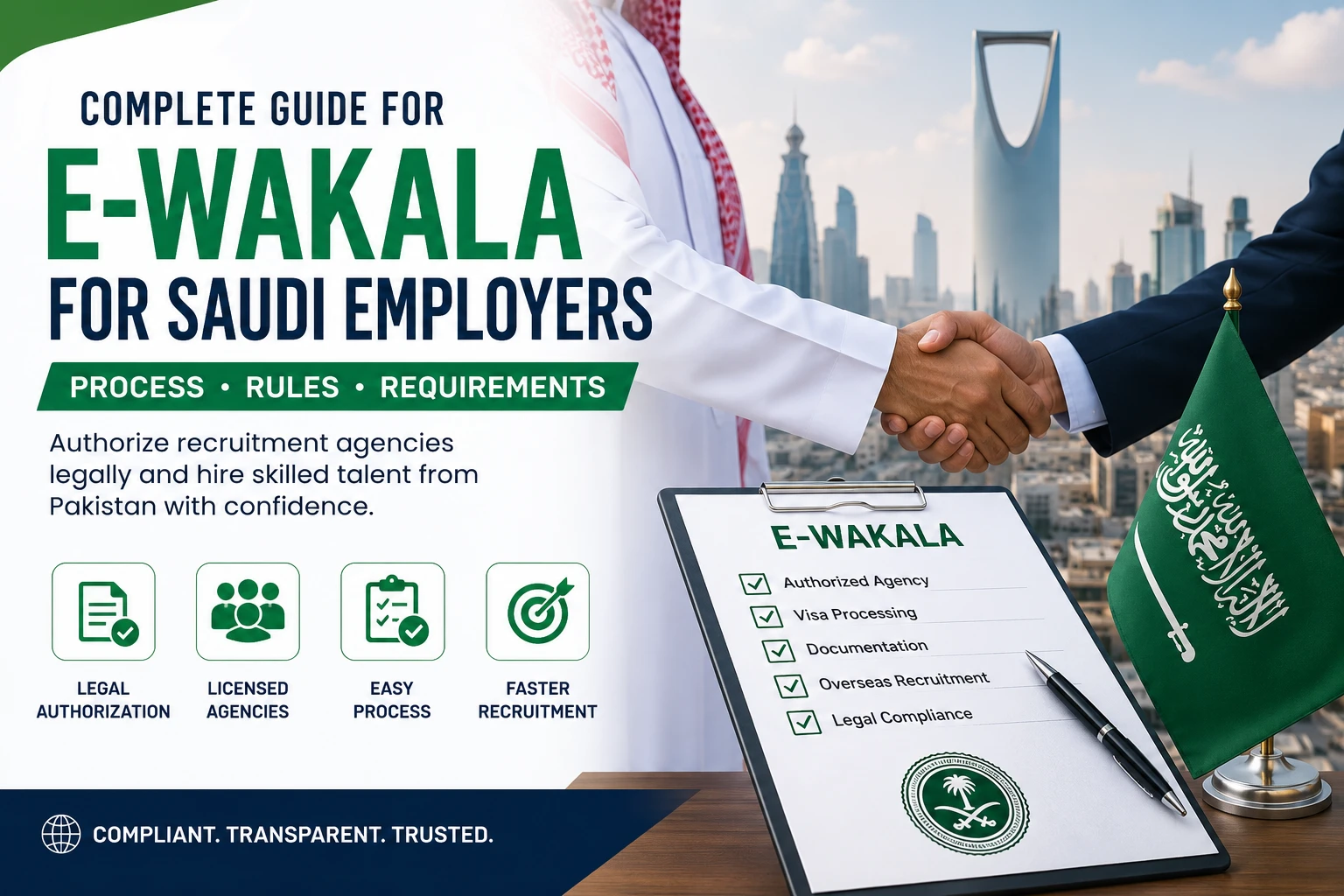

Hiring skilled professionals from Pakistan has become a strategic workforce solution for Saudi companies looking to meet growing business demands. Whether you are an HR manager, project manager, government contractor, or business owner in Saudi Arabia, recruiting qualified Pakistani professionals can help your organization reduce hiring costs while maintaining high workforce quality. This guide explains the complete recruitment process for Saudi employers looking to hire top talent from Pakistan legally, efficiently, and in compliance with Saudi regulations.
Why Pakistan Is a Prime Recruitment Destination
Saudi employers are increasingly choosing Pakistan as a trusted recruitment source because of its large pool of skilled professionals, certified technicians, engineers, healthcare staff, and industrial workers. Pakistan offers Saudi companies access to qualified talent that supports business growth, large-scale projects, and Vision 2030 workforce requirements.
Step 1 — Define the Role with Precision
Before you search for candidates, you need absolute clarity on what you are hiring for Vague job descriptions attract the wrong applicants and waste everyone’s time. Start by answering these questions internally:
- What specific skills, tools, or certifications are non-negotiable?
- Is this a full-time position, contract-based, or project-specific?
- Will the candidate work remotely, relocate, or operate from a local office?
- What is the reporting structure and who does this person directly collaborate with?
- What are the short-term deliverables and long-term expectations?
Once you have answers, write a job description that is honest, detailed, and human. Avoid inflating requirements or using corporate jargon that obscures what the role actually involves. Pakistani candidates, particularly those experienced in international hiring, respond well to transparent and clearly scoped job postings.
Step 2 — Choose the Right Recruitment Channel
Where you post and how you search makes a measurable difference in the quality of applicants you receive. Online Job Portals: Platforms like Rozee.pk, Mustakbil, and Indeed Pakistan attract a large volume of active job seekers. These are well-suited for roles where you expect a high application volume and need a structured filtering process. LinkedIn: For mid-to-senior level positions — particularly in tech, finance, marketing, and management — LinkedIn remains the most effective channel. It allows you to evaluate professional history, endorsements, and activity before reaching out. Recruitment Agencies: Several reputable HR firms in Pakistan specialize in sourcing talent for both local and international clients. Partnering with a local agency gives you access to pre-screened candidates and cultural insight that can shorten your time-to-hire significantly. University Partnerships: If you are looking for fresh graduates or entry-level talent, establishing ties with universities like LUMS, IBA, NUST, or FAST-NUCES can give you early access to top performers before they enter the broader job market. Referral Networks: Word-of-mouth still carries enormous weight in Pakistan’s professional culture. If you already have Pakistani employees or contractors, encourage them to refer qualified peers from their networks.
For Saudi employers, partnering with a licensed recruitment agency like AlSaudiPak simplifies candidate sourcing, document verification, visa processing, and deployment while ensuring full compliance with Saudi regulations.
Step 3 — Screen Applications Systematically
Once applications start coming in, a structured screening process ensures you evaluate candidates fairly and efficiently. Begin with a resume review focused on relevance — not perfection. Look for evidence of real accomplishments rather than just a list of responsibilities. In Pakistan, many candidates undersell themselves in resumes, so a cover letter or a brief written task can help surface genuinely capable individuals. For technical roles, a short skills assessment at this stage is both fair and efficient. Keep it focused — a two-hour task that mirrors actual work is far more revealing than a three-day project that asks too much of someone still employed elsewhere. Shortlist no more than five to eight candidates per role for the interview stage. More than that and the process becomes difficult to manage without losing objectivity.
Step 4 — Conduct Structured Interviews
The interview stage is where many companies lose strong Pakistani candidates — either by moving too slowly, communicating poorly, or conducting unstructured conversations that feel vague and unprofessional. Structure your interviews in clear rounds:
- First Round: A conversational interview to assess communication, cultural fit, and role understanding. This can be conducted by HR or a talent acquisition specialist.
- Second Round: A technical or domain-specific interview with the hiring manager or a senior team member. This round should test depth of knowledge and problem-solving ability.
- Third Round (if needed): A final discussion with leadership for senior hires, focused on alignment with company values, long-term goals, and compensation expectations.
Inform candidates in advance about what each round involves and how long it will take. Respect their time. Pakistani candidates — especially those currently employed — manage busy schedules and appreciate an interviewer who is organized and on time.
Step 5 — Conduct Background and Reference Checks
Before extending an offer, verify what the candidate has presented. Background checks in Pakistan typically involve confirming:
- Previous employment dates and titles
- Academic credentials from the issuing institutions
- Any professional licenses or certifications claimed
- Character or professional references from former managers
Reference checks are often skipped but they are genuinely valuable. A ten-minute conversation with a former manager can tell you far more about a person’s reliability, teamwork, and performance under pressure than the most polished interview ever could. For roles involving sensitive data, financial access, or legal responsibilities, consider engaging a local background verification service to handle the process formally.
Step 6 — Extend a Competitive and Clear Offer
Pakistan’s job market — particularly for skilled professionals — is competitive. Top candidates often have multiple offers in consideration. When you are ready to hire, move quickly and present an offer that is specific, fair, and complete. Your offer letter should clearly outline:
- Job title and department
- Compensation structure (base salary, performance bonuses, allowances)
- Leave entitlements and working hours
- Probationary period, if applicable
- Benefits such as health insurance, provident fund contributions, or remote work allowances
- Start date and reporting line
Avoid vague language like “competitive salary” or “benefits as per company policy” without specifics. Pakistani candidates, particularly those who have researched international hiring norms, will notice and it may cause hesitation.
Step 7 — Handle Legal and Compliance Requirements
When hiring skilled professionals from Pakistan for Saudi Arabia, employers must follow the Kingdom’s official recruitment requirements. This includes completing the E-Wakala process, work visa documentation, employment contracts, and other legal approvals. Partnering with a licensed recruitment agency helps Saudi companies manage these requirements efficiently, reduce recruitment risks, and ensure a smooth hiring process while remaining fully compliant with Saudi regulations.
Step 8 — Onboard Thoughtfully
A strong onboarding experience sets the tone for the entire employment relationship. For candidates joining from Pakistan — whether in-person or remotely — a structured first week matters enormously. Make sure the following are in place before day one:
- Equipment, software access, and accounts are ready
- A clear onboarding schedule with introductions to team members
- Documentation including employee handbook, policies, and role expectations
- A designated point of contact for questions during the first month
For remote hires, schedule regular video check-ins during the first thirty days. The adjustment period is real and a manager who shows genuine interest in their new hire’s progress will build trust faster than any policy document ever will.
Common Mistakes Companies Make When Recruiting from Pakistan
Even well-intentioned companies stumble in predictable ways. Avoid these:
- Offering below-market salaries and expecting top talent. The cost advantage is real, but exploitation is not a strategy. Pakistani professionals know their market value.
- Slow hiring processes. A three-month recruitment cycle will cost you your best candidates.
- Ignoring cultural context. Understanding religious holidays, communication preferences, and local work norms builds a far healthier working relationship from the start.
- Skipping the legal framework. Hiring without understanding labour law creates liability for both parties.
Conclusion
For Saudi companies, hiring skilled professionals from Pakistan is a reliable way to build a qualified workforce while supporting long-term business growth. By partnering with an experienced recruitment agency, Saudi employers can streamline the hiring process, ensure legal compliance, and quickly access skilled Pakistani talent across multiple industries. If you’re planning to recruit for your next project, AlSaudiPak is ready to help.
Frequently Asked Questions
Q: Do I need a local office in Pakistan to hire employees there?
Q: What is the average notice period for employees in Pakistan?
Q: Is English proficiency generally strong among Pakistani professionals?
Q: How long does the full recruitment process typically take?
Q: Can I recruit from Pakistan for roles requiring relocation to another country?
Q: What industries are most competitive for recruitment in Pakistan?